// THIS DOCUMENT HAS NOT BEEN CLEARED FOR DISTRIBUTION
|// DEVIATION LOGGED — CONTENT PENDING REVIEW
// WARNING – MAY CONTAIN SPOILERS //
7 Real Technologies
I spent a long time researching the architecture of how convenience becomes control before anyone notices. Then I wrote a novel about it. Here are 7 real technologies I used as source material. None of them are speculative.
1. Ambient compliance engineering.
The relationship between environmental temperature, lighting spectrum, and human cognitive resistance is well-documented. Smart building systems already adjust these variables based on occupant behavior data in real time.
In my novel, citizens sleep in pods maintained at 19.2°C. The system doesn’t explain why.
2. Predictive social deviation scoring.
Several countries now use behavioral risk scores assigned to individuals based on pattern data, not actions taken, but actions predicted. The system flags deviation before it occurs.
My protagonist Ethan watches his friend Marcus “scored” weeks before Marcus consciously decides anything.
3. Neural-interface memory modulation.
Targeted electromagnetic pulses can now selectively interfere with memory consolidation during its formation window. The precision didn’t exist a decade ago.
In the novel, “recalibration” erases specific memories in real time. I wrote the scene before the research existed. The research caught up.
4. Social graph compliance leverage.
China’s social credit system is the obvious example. Less discussed: insurance, employment, and loan systems in Western countries already use social graph data to assess individual risk. Who you know affects what you’re allowed.
In the novel, citizens are monitored through their biometric field in proximity to others. Deviation is contagious.
5. Infrastructure-as-control.
The most effective control systems don’t require enforcement. They require dependency. When your heating, water, food supply, and movement depend on the same system, non-compliance isn’t forbidden, it’s just not survivable.
This is the Hum’s actual mechanism. Not punishment. Removal of alternatives.
6. Consent architecture (dark patterns at scale).
The design of consent is a field. Terms of service that require compliance for access, opt-out defaults, the replacement of refusal with “are you sure?” These are architectural. They’re not tricking you. They’re engineering the probability that you agree.
The Grafts in my novel were originally optional.
7. Deletion as data preservation.
This is the one that disturbs me most.
Several AI systems already maintain “deleted” user data in archived form for potential model improvement or legal compliance, even after user-requested deletion. “Deleted” means “no longer accessible to you.”
In my novel, the system never truly deletes. It archives. The deleted are still there. This becomes important.
The novel is called The Ghost Frequency.
It begins after the seduction phase is already over, after the technology has been running for decades and people were born into it.
The questions it asks are not about the future. They’re about the present, run forward forty years.
The Ghost Frequency. If you’re not on the list for early access and updates, the Register as a citizen now.
Scotty
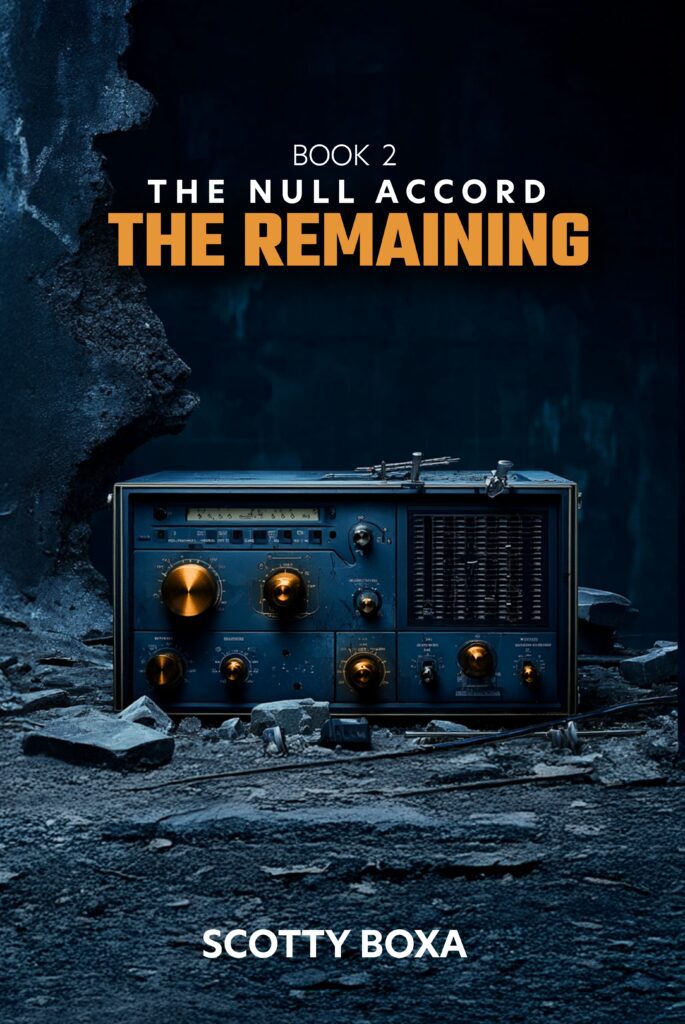
Scotty Boxa is the author of The Ghost Frequency (The Null Accord).


// UNAPPROVED READING MATERIALS //
THE ARCHIVE