// THIS DOCUMENT HAS NOT BEEN CLEARED FOR DISTRIBUTION
|// DEVIATION LOGGED — CONTENT PENDING REVIEW
The “The Graft” – What I Know About Pain
And what I put into my novel because of it
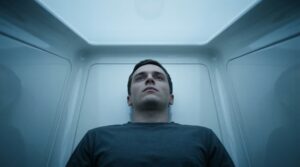
The first scene of The Ghost Frequency opens with a man lying still in a sleeping pod, waiting for the pain to finish.
The Grafts fire at 5:47am, same as every morning. Silver threading in the cervical vertebrae, the base of the skull, down through the neck, into the shoulders. Pressure first, spreading, then thinning as it reaches the wrists and fingers. Ethan has had the Grafts since childhood. He knows exactly what is coming and in what order. He lies still and waits for the cycle to complete.
I wrote that scene from somewhere real.
What CRPS Is
I have Complex Regional Pain Syndrome. CRPS. It lives in my neck and arm, and it has been there long enough that I have learned its language the way Ethan has learned the language of the Grafts, not with acceptance, not with peace, but with the specific, hard-won knowledge of someone who has had no choice but to understand the thing that is happening to them.
CRPS is a nervous system disorder. The mechanism, simplified, is this: something triggers the pain response, an injury, in my case damage to the cervical spine and the nervous system, instead of settling back to baseline once the trigger is addressed, keeps going. It cannot find the off switch. The pain signals continue after the reason for them has passed, or changes, or becomes unclear, because the system itself is now the problem. Your own nervous system becomes something you cannot trust.
I want to describe what that actually feels like, because the clinical language does not cover it.
The Burning
The most consistent thing is the burning.
Imagine someone has thrown petrol on your neck and shoulder and arm and set it on fire. Not metaphorically. That specific, chemical, spreading heat, the kind that sits just below the skin and radiates outward and will not be cooled. It is there when I wake up. It is there when I go to sleep. On the better days it sits in the background, a constant I have learned to move around. On the worse days it is all there is.
It comes in waves too, on top of the baseline. Something triggers it, a repetitive movement, holding my arms above my head for more than a few seconds, cold water, an ice bath. The wave comes fast. The burning intensifies from background noise to something that demands your full attention, and then it does not quickly subside. It sits.
The Pressure and the Stabbing
At the base of my skull and at T1, the topmost thoracic vertebra, where the neck meets the upper back, there is pressure. Not pain exactly, or not only pain. Pressure like something is being held too tight for too long. Like a fist closing slowly around the base of your skull and not opening.
At T4, between the shoulder blades, there is a different quality. Stabbing. Specific. A point of pain that arrives without warning and leaves without courtesy. It does not respond to the things that are supposed to help. It is simply there or it is not, and you learn to note its presence without giving it more attention than it already demands.
The muscles, the neck, the shoulder, the trap, hold a tension that is not like the tension of stress or effort. It is more like a sustained cramp. A cramp that began hours ago and has not released. The muscle is not relaxing. The muscle has forgotten how to relax. You can feel it with your hand, the difference between the affected side and the other, one soft, one like something braced permanently against an impact that never quite arrives.
The Spread
The pain does not stay in one place. It moves through the neck, down through the shoulder, into the arm. Not along a clean line, the spread is diffuse, like heat through water, filling the space rather than following a path. The arm feels sometimes weak. The hands feel sometimes strange. Not numb exactly. More like the signal is being interrupted somewhere along the way and arriving changed.
My pinky finger twitches when I have pushed too far. That is the warning. Not pain first, the twitch. My body developed its own early alarm system because it learned, over time and at cost, what comes after the twitch if I do not stop. The body knows things the mind is slower to accept. When the pinky goes, I stop. Whatever I am doing, I stop.
What This Has to Do With Ethan
When I wrote the opening scene of The Ghost Frequency, I was not consciously drawing on any of this. The Grafts arrived as part of the world-building, a neural management system needed a physical mechanism, and the mechanism I imagined was threading through the cervical vertebrae, firing on a schedule, cycling through a sequence of pressure and spread.
It was only later, sitting with the scene, that I understood where it had come from.
The specific geography of the pain in the book, base of skull, spreading to shoulders, thinning at the wrists, is the geography I know. The sequence is the sequence I have lived. The detail that Ethan does not react with surprise, that he has had the Grafts since childhood and the pain is the same every morning and you would think the body would stop being surprised by it but his has not, that sentence came from somewhere very specific.
You never stop being surprised by it. That is one of the things nobody tells you. Even when you know it is coming, even when you have felt it a thousand times, there is a part of you that registers it fresh each time. Some stubborn piece of your nervous system that has not accepted that this is just how things are now.
The Difference
There is one significant difference between what Ethan experiences and what I experience, and it matters to the book.
Ethan’s pain is designed. It is intentional. The Grafts fire on a schedule because the system requires compliance, and the pain is part of the mechanism, it is how the body is reminded, every morning, that the system is there and that the system is in charge. The pain is not a malfunction. It is a feature.
My pain is not designed. It is a malfunction. My nervous system is doing something it was not supposed to do, something that serves no purpose, something that causes damage without producing information. It is noise, not signal.
What I found, writing this book, is that the experience of the two is not as different as you might expect. In both cases: you lie still. You wait for the cycle to complete. You learn the warning signs. You develop the specific, exhausting expertise of someone who has had to become an authority on something they never wanted to study. You build your day around what the pain will and will not permit.
You do not get used to it. You get around it. There is a difference.
Why I’m Telling You This
I am telling you this because the book asks a question I have been asking for longer than I have been writing it.
The question is about what it means to live inside a system, biological, technological, social, that is doing something to your body without your consent. The Hum in The Ghost Frequency does this deliberately. CRPS does it accidentally. But the experience of the person inside the system — the lying still, the waiting, the learning of sequences, the pinky finger twitch, the stubborn surprise every morning, that experience does not care much about the system’s intentions.
The body is just responding. The body is always just responding. The question is what you do while it does.
Ethan’s answer, over the course of the book, is to stop waiting for the pain to end before he decides to live. That answer took me four years to write. It has taken me longer to learn.
Scotty
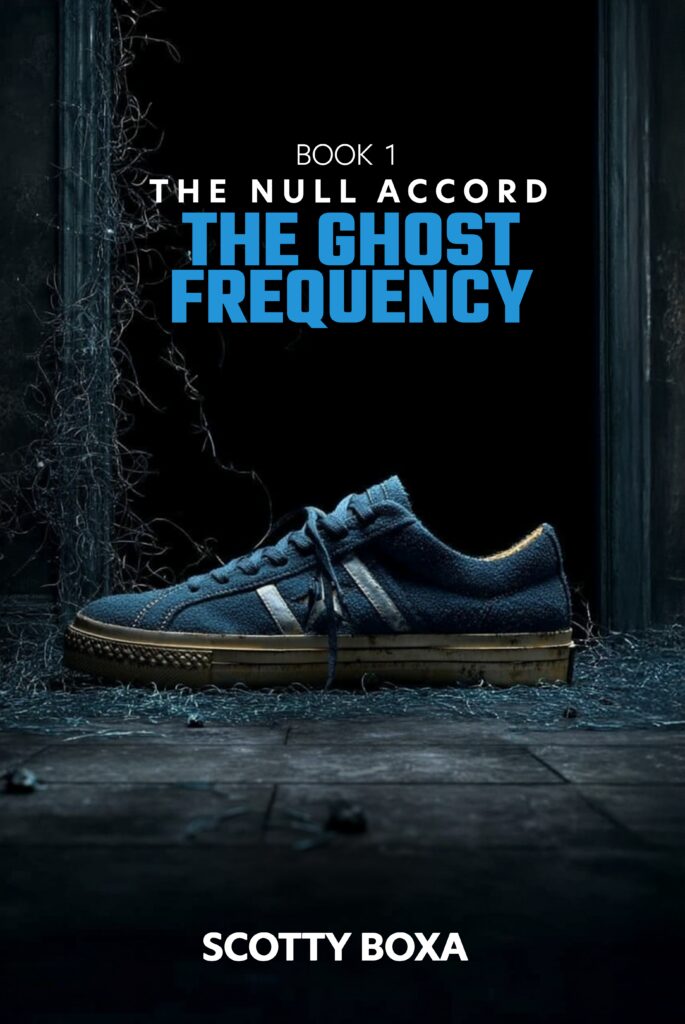
Scotty Boxa is the author of The Ghost Frequency (The Null Accord).
// UNAPPROVED READING MATERIALS //
THE ARCHIVE